
Quality Assurance
Our Quality Assurance Process
High‑quality assurance within our school is at the heart of everything we do, ensuring that every student receives the best possible education and support. Through regular monitoring, thoughtful evaluation, and a commitment to continuous improvement, we maintain high standards in teaching, learning, and student wellbeing. Our staff work collaboratively to review performance, share best practices, and respond proactively to feedback from students, parents, and the wider community. By fostering a culture of accountability and growth, we ensure that our school remains a safe, inclusive, and inspiring environment where every learner can thrive and achieve their full potential.
Our QA Cycle
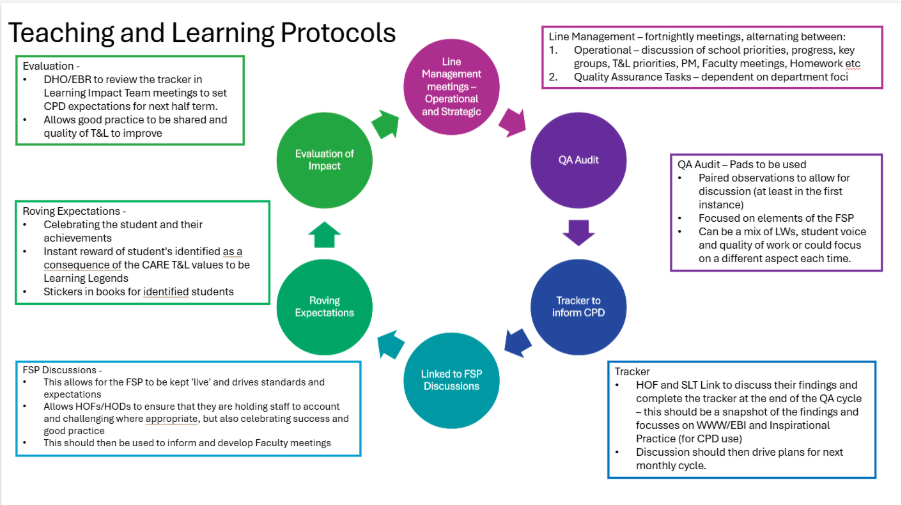
Our Quality Assurance Cycle provides a structured, consistent approach to monitoring and improving teaching and learning across the school. Each stage plays a vital role in ensuring that standards remain high and that staff are supported to deliver excellent practice.
The stages are as follows:
1. Line Management Meetings
Fortnightly meetings alternate between:
-
Operational discussions — school priorities, progress of key groups, teaching and learning priorities, performance management, independent learning, and faculty updates.
-
Quality Assurance tasks — focused activities linked to departmental priorities and areas for development.
These meetings ensure that leaders and staff remain aligned, informed, and proactive.
2. QA Audit
-
Paired observations encourage professional dialogue and shared understanding.
-
Audits focus on key elements of the department’s Faculty Strategic Plan.
-
Evidence may include learning walks, student voice, and work scrutiny.
-
Each audit can focus on a different aspect of teaching and learning, depending on need.
This stage provides a clear snapshot of strengths and areas for development.
3. Tracker
-
Heads of Faculty and SLT links review findings at the end of each QA cycle.
-
The tracker captures What Went Well, Even Better If, and examples of inspirational practice.
-
Insights from the tracker shape priorities for the next cycle and inform CPD planning.
This ensures that improvement is continuous, targeted, and evidence‑based.
4. Faculty Strategic Plan Discussions
-
Keeps the Faculty Strategic Plan “live” and central to daily teaching.
-
Ensures leaders hold staff to account while also celebrating success.
-
Outcomes feed directly into faculty meetings and departmental planning.
These discussions help maintain consistency and drive high expectations.
5. Roving Expectations
Senior Leaders visit lessons daily to reward good learning aligning to our Teaching & Learning CARE values of Connect, Adapt, Respond and Engage.
-
Celebrates student achievement and reinforces positive learning behaviours.
-
Students demonstrating CARE values are recognised as Learning Legends.
-
Stickers and instant rewards help promote a culture of pride and motivation.
This stage strengthens the link between teaching, behaviour, and student engagement.
6. Evaluation of Impact
-
Senior Leaders reviews the tracker to set CPD priorities for the next half‑term.
-
Good practice is shared widely to raise the overall quality of teaching and learning.
This final stage ensures that the cycle leads to meaningful, measurable improvement.
How We Maintain High Standards
-
Regular Monitoring of Teaching and Learning — Lessons are observed throughout the year, with constructive feedback provided to help teachers refine their practice and share successful strategies across the school.
-
Student Progress Tracking — We closely monitor each student’s academic development using assessments, classwork, and teacher insights. This allows us to identify strengths, address gaps early, and provide targeted support.
-
Curriculum Review — Our curriculum is reviewed annually to ensure it remains engaging, inclusive, and aligned with national expectations. Subject leaders work together to keep content relevant, ambitious, and responsive to student needs.
-
Student and Parent Voice — We actively seek feedback through surveys, meetings, and informal conversations. These insights help shape improvements and ensure our community feels heard and valued.
-
Staff Development — Teachers and support staff take part in ongoing professional development, ensuring our team stays up to date with the latest educational research and best practice.
-
External Evaluation — We welcome external partners, advisors, and inspectors to review our work. Their independent perspectives help validate our strengths and highlight areas for further growth.
Our Commitment
Quality assurance is not a single event — it is a continuous, reflective cycle that underpins everything we do. By following a clear, structured QA process, we ensure that teaching remains strong, students feel supported, and our school continues to grow as a vibrant, ambitious learning community.